
Why this story matters: In an era where the digital landscape is often flooded with polarizing and negative headlines, stories like this serve as a vital reminder that meaningful, quiet progress is unfolding across the globe every single day.
Quick summary: This story highlights recent developments related to desert, showing how constructive action can lead to meaningful results.
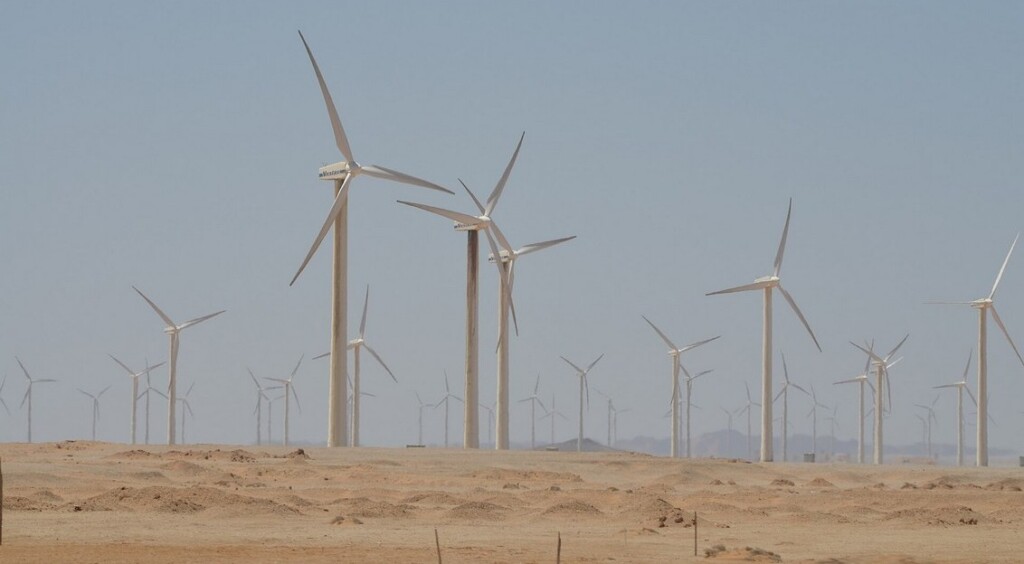
The Land of the Nile has quickly joined the number of countries responding to the current oil shock by announcing new wind and solar projects.
For a country that’s over 90% sand desert, where the Sun was deified in ancient times as a scarab beetle and its dung ball, and where the Sahara wind is so desiccating it’s known as samoom, or “poison,” installing gigawatts of solar and wind energy seems a no-brainer.
On March 18, the Egyptian electricity and renewables ministry announced than agreement for nearly 6 gigawatts of solar, wind, and battery storage facilities along the Red Sea coastline to be developed in a partnership between the Egyptian firm Orascom Construction, French utility Engie, and Japanese conglomerate Toyota Tsusho.
Would you like to read more good news about Desert, Wind, Egypt, Solar, Renewable Energy, and Oil?
The photovoltaic panel is currently, and by a substantial margin, the cheapest form of scalable renewable energy technology, and so while 900 megawatts will come from wind energy, 5-times that amount will be generated from solar and battery storage.
Egyptian electricity minister Mahmoud Essmat said that expanding renewable energy projects and adopting battery storage will help to “reduce the country’s reliance on fossil fuels, cut carbon emissions, enhance grid stability and security, and ensure uninterrupted electricity supply.”
Home to 107 million people, Egypt is the most-populous state in the Arab world, and enjoys one of the highest GDP per capita therein.
EGYPTIAN NEWS:
- Egypt Becomes 26th Country to Eliminate Leading Cause of Infectious Blindness with Triumph Over Trachoma
- Undersea Cable to Funnel 3 Gigawatts of Solar Energy From Egypt to Power Millions of European Households
- Wind Farms in Africa Aim To Power New Era of Clean Reliable Energy While Saving a Billion Tons of CO2
Egypt’s electricity demand has more than doubled over the past two decades, driven by rapid population growth and industrial expansion. This surge has primarily been met by natural gas, which made up 84% of Egypt’s electricity mix in 2023. To reduce its dependence on fossil fuels, Egypt has set a target of 42% renewable electricity by 2030.
If it wasn’t ironic enough that the country blessed with more wind and sunshine than almost any other country on Earth has almost no outstanding renewable capacity for sun and wind power, most of the renewable power it does have comes from water—a resource absent from roughly 98% of the whole country’s land area. The River Nile is a heck of a thing.
In 2019, Egypt completed one of the biggest solar installations in the world, Benban Solar Park, which generates 1.8 GW to power 1 million homes. In April 2025, Africa’s largest wind farm began operating in the town of Ras Ghareb, with 500 MW, and plans for a 650-MW expansion.
BluAZ.com curates positive and solution-focused stories from trusted sources around the world.
